Fire Pit vs Fireplace: Start with Function, Not Price
Fire pits and fireplaces both give you a place to gather around a fire, but they behave very differently once you actually lay out a patio. They aren’t interchangeable features, even though they’re often treated that way. It’s easy to lean toward a fire pit early on because it looks simpler and less expensive, but that’s usually before the rest of the space has been thought through.
Once you start considering how people will move through the patio, where seating goes, and how the space will actually be used, the fire feature ends up doing a lot more than just holding a flame. It influences the layout, the flow, and even how people interact in the space. A fireplace tends to anchor and define an area, while a fire pit keeps things more open and flexible. Both can work well—it just depends on what kind of space you’re trying to create.
TL;DR:
Fire pits and fireplaces both center around fire, but they shape your patio in very different ways. The right choice comes down to how you want the space to function, not merely what the feature costs.
Fireplace → Anchors and defines a space with a clear focal point
Fire Pit → Open and flexible, but works best when the surrounding area is designed around it
Fireplace → Easier to integrate into an existing patio layout
Fire Pit → Often requires added space, seating, and planning
Start with the layout, then choose the fire feature. Both can add value when properly placed and built.
1. Patio Traffic and Function
Fireplace = Anchor and Focal Point
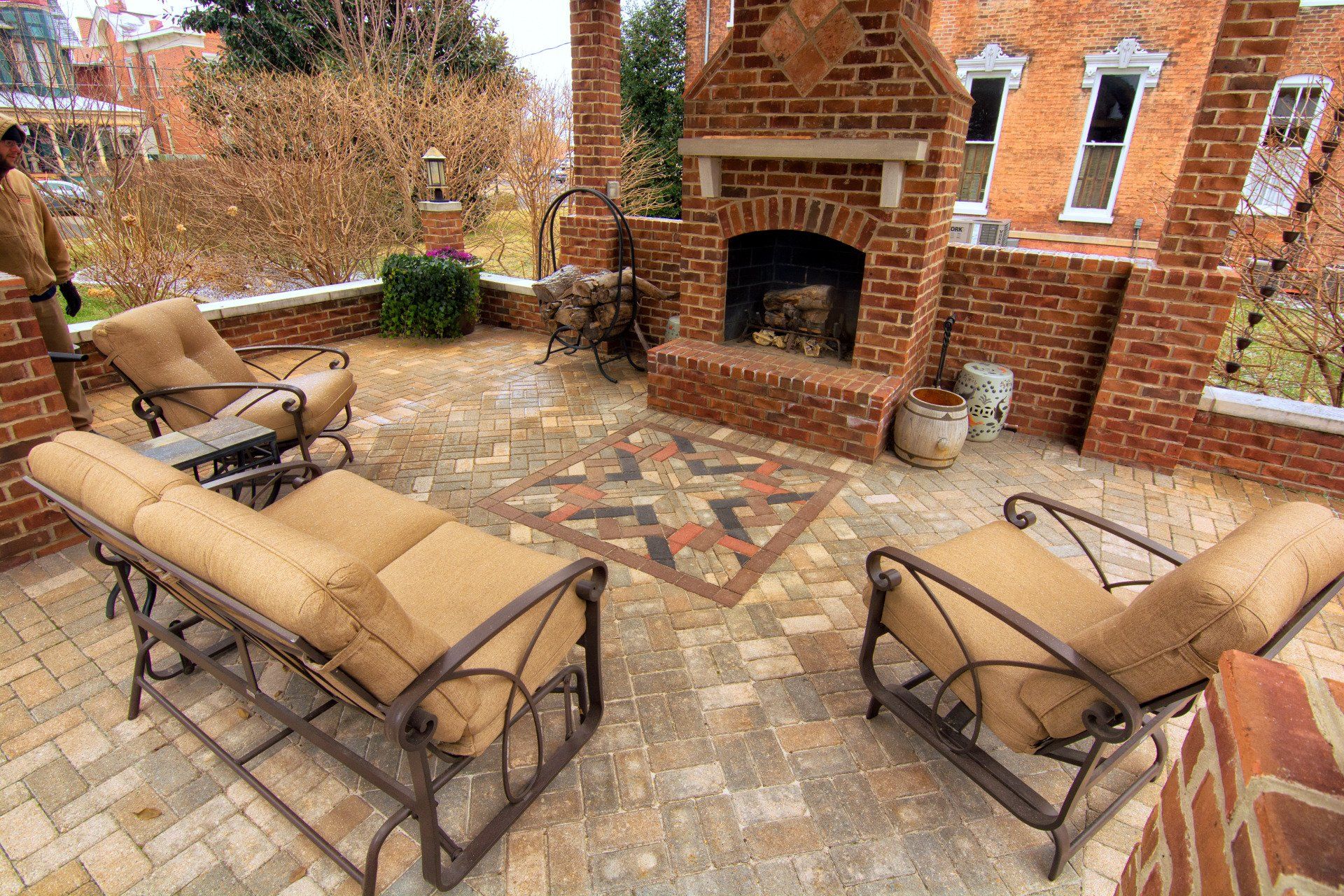
Choosing a fireplace means you’re placing a large, stately focal point in your patio. A fireplace is a static destination. With the exception of see-through designs, it has a fixed orientation—people face it, and in doing so, they typically face away from the rest of the yard and toward a specific view or feature. That fixed direction actually makes traffic flow easier to plan because the gathering area is clearly defined.
Fireplaces are often used as the centerpiece of an outdoor living space, working alongside structures like a lanai or pergola, or helping balance elements such as a pool or outbuilding. You’re always designing around that anchor. Because of that, fireplaces tend to fit naturally into more straightforward backyard layouts—patio, then lawn, with minimal movement beyond that. Placing one at the end of an open or heavily used area allows it to settle into the design without competing with other elements.
Fire Pit = Addition and Movement
Fire pits can still be a major feature, but they’re usually introduced as an addition rather than the anchor of the space. They create a more dynamic environment. People gather from all sides, move in and out more freely, and the seating often turns back toward the house instead of outward toward a view. That flexibility is part of their appeal.
Where fire pits really stand out is in larger, more layered yards—spaces with multiple zones, changes in elevation, or meandering paths through gardens. In those settings, a fire pit becomes a destination within the landscape rather than the center of it. It’s often set slightly apart from the main patio or given its own defined area, which encourages movement through the space and adds another place for people to gather. While a fire pit can act as a focal point, it typically doesn’t anchor a design the way a fireplace does—it adds to it instead.
Always consider your budget, but continually build what you want. You may not be able to afford your dream backyard all at once, but plan out the major strokes and layout. Stick to your plan and slowly chip away at it. You’ll be glad you started building what you want and planned.
2. Access and Usability
Fireplace = Front-Facing and Controlled
A fireplace has a defined front and back. Even a see-through unit still has two distinct sides, which makes placement relatively straightforward. Because it’s directional, you can plan how people approach it, where they sit, and how circulation moves around it. Furniture and surrounding features tend to fall into place naturally once the orientation is set.
That front-facing design also gives you control. You can position a fireplace to frame a view, create privacy, or block something you’d rather not see. Its size and presence make it easy to anchor a space and organize everything around it. In most layouts, it’s hard to misplace a fireplace—as long as you’re intentional about what it faces.
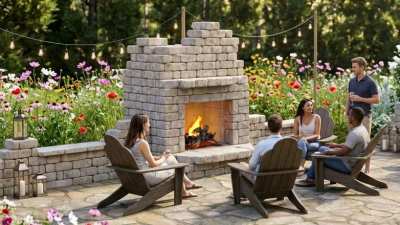
Fireplace and Seat Wall Ruins Kit – Create a Cozy Outdoor Seating Area
Have an outdoor living space separate from a structure? Are you looking for a unique patio idea? Check out our Garden Ruins line. You can choose from several faux ruins kits to create an old cottage ruins that will be the centerpiece of an amazing outdoor living space.
Fire Pit = Open and Flexible
A fire pit is accessed from all sides, which makes it more flexible but also less defined. People can gather, shift positions, and move in and out freely, so the surrounding layout has to account for that movement. Even when a fire pit is square or set within a more structured seating area, the way people use it remains open and fluid.
Because of that, fire pits are often given their own space—either as a dedicated area within the patio or slightly separated from it. Seating is typically built around them, whether permanent or movable, and that added footprint needs to be considered early in the design. It’s not just the fire pit itself—it’s the space around it that makes it work.
3. Integration Into Existing Patio Designs
Fireplace = Easy and Intuitive
Fireplaces typically carry a higher upfront cost than a fire pit, but they’re often easier to integrate into an existing patio. Because they’re directional, they can be placed along the edge of a space or at the end of a main gathering area without disrupting how the patio already functions. You’re essentially placing a defined feature into a defined space, which makes layout decisions more straightforward.
In many cases, an existing patio can be used as-is or with only minor modifications. Once the footing is properly prepared, the fireplace becomes an anchor point that the rest of the layout can orient around. Whether it’s centered or placed at the end of a primary seating area, it tends to settle into the design naturally without requiring a full rework of the space.
Fire Pit = More Flexible, but More Involved
Fire pits offer more flexibility in how they’re used, but that flexibility makes placement more involved. Unless you’re placing one directly in the center of an existing patio, the layout requires more planning. Because a fire pit is accessed from all sides, you need to account for circulation, seating, and spacing in every direction—not just one.
There are also practical considerations. Drainage matters, especially in open areas, or you can end up with standing water and ash after rain. Seating is another factor. Many fire pits work best when paired with a seat wall or defined edge to help organize the space. In some cases, this means adding a small, dedicated patio area or extending an existing one.
That said, there are ways to work a fire pit into an existing layout. Corner installations can be effective, especially when paired with a seat wall, while curved or radiused designs often require more intentional planning. In many projects, the final solution ends up being a hybrid—part of the existing patio, part new space built specifically to support the fire pit.
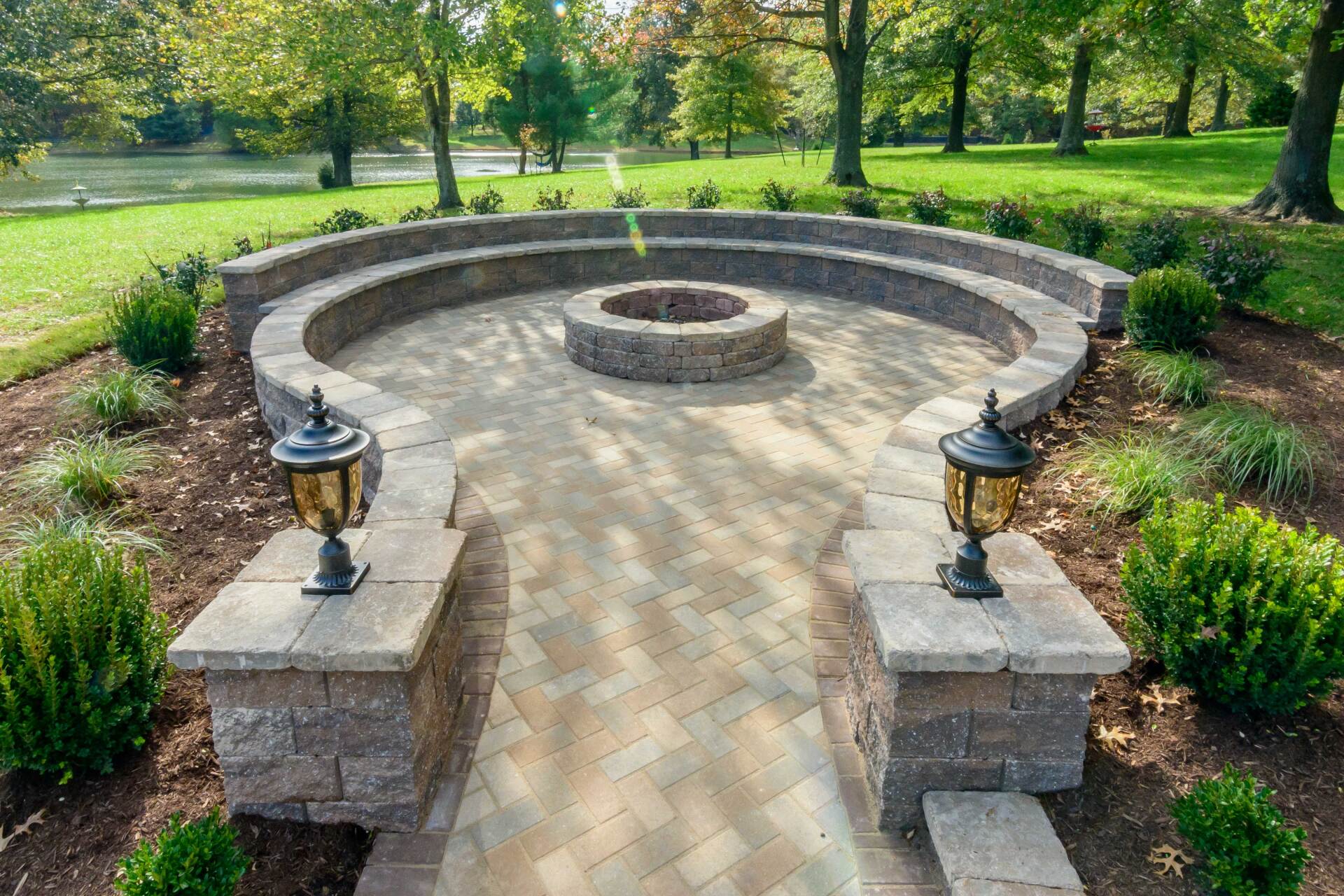
This seat wall and fire pit is on its own pad off the main patio. It makes a nice addition.
Our Fire Pits with Seat Wall Kits Offer a Great Gathering Area for Your Patio
Creating a Defined Fire Pit Area is the Easiest Way to achieve a High ROI when Adding a Fire Pit
A fireplace is almost always perceived as an upscale addition. It reads as architecture, not just a feature. The scale, vertical presence, and built-in feel naturally draw attention and give the space a sense of structure. In many layouts, a fireplace becomes the visual anchor by default, even before furniture or other elements are added.
That presence is part of the appeal. A well-placed fireplace can define an outdoor living area and tie together surrounding features like seating, kitchens, or overhead structures. It doesn’t just add fire—it adds a sense of permanence and intention to the space.
Fire Pit = Perception Depends on Execution
Fire pits cover a wide range in how they’re perceived. At one end, people picture a simple ring set out in the yard. At the other, a properly built fire pit with paving and seating can feel just as intentional as any other outdoor feature. The difference usually comes down to how it’s integrated.
On its own, a fire pit can feel temporary or unfinished. Once it’s placed on a defined surface and paired with seating—especially a seat wall—it becomes a much more complete and functional space. In that context, it shifts from a casual add-on to a purposeful gathering area that contributes real value to the overall design.
5. Return on Investment
Fireplace = Strong Visual Impact at Resale
A well-built outdoor fireplace tends to stand out in a listing. It photographs well, reads as a permanent architectural feature, and often becomes one of the main focal points of the property. Because fireplaces are less common and carry a more “built-in” presence, they can help a home feel more finished and considered.
That doesn’t guarantee a direct dollar-for-dollar return, but it can make a property more appealing and memorable to buyers—especially in listings where outdoor living space is a selling point.
Fire Pit = ROI Through Use and Completion
Fire pits can absolutely add value, but the return is usually tied to how complete the space feels. A fire pit on its own doesn’t carry much weight, but when it’s part of a defined seating area with proper paving and layout, it becomes a usable outdoor room.
The return here is often more about livability than impact in a listing photo. A well-designed fire pit area shows that the backyard has been thought through and built for use, which still adds value—it just tends to be less immediate or dramatic than a fireplace.
6. Design Aesthetic
Fireplace = Structured and Formal
Part of a fireplace’s appeal is the formality it brings to an outdoor space. It reads as architecture, not just a feature, and that carries a different tone. The scale, detailing, and vertical presence all contribute to a more structured, intentional look—something that naturally lends itself to hosting, dining, and more defined gathering spaces.
It’s not just about the fire—it’s about the setting around it. A fireplace tends to create a backdrop for the space, giving it a finished, composed feel.
Fire Pit = Casual—Until It’s Designed as a Space
Fire pits naturally lean more casual. On their own, they’re simple and open, with the focus on the fire and the interaction around it. That flexibility is part of the appeal, but it’s also why some fire pits feel temporary or undefined.
Where fire pits really come into their own is when they’re built as part of a space rather than placed in one. Adding a seat wall, defining the area with paving, and giving the fire pit a clear footprint transforms it from a casual feature into a purposeful gathering area.
At that point, the aesthetic shifts. It’s still more relaxed than a fireplace, but it feels intentional, complete, and designed—not just added.
7. Perceived Privacy
Fireplace = Built-In Sense of Enclosure
Fireplaces tend to create a stronger sense of privacy, even when they’re not fully enclosed. The height and vertical mass give you something behind you or beside you, which naturally makes a space feel more contained. Even though the actual privacy is limited to the immediate area around the firebox, the psychological effect is noticeable—it feels more like a defined outdoor room.
Of course, true privacy still comes from the overall design. Trees, shrubs, and other landscape elements do most of the real work. But a fireplace contributes to that feeling by adding structure and blocking sightlines in a way a lower feature cannot.
Fire Pit = Open Views, Privacy by Design
Fire pits are much more open by nature. On their own, they offer little in the way of privacy, but that openness is also part of their appeal—they preserve views and keep the space feeling less confined.
To create a sense of enclosure, the surrounding design matters more. Adding a seat wall, defining the space with paving, or incorporating planting can create the same feeling of privacy without completely closing off the area. In most cases, a fire pit relies on the space around it to create privacy, rather than the feature itself.
Summary: Fireplace vs. Fire Pit
Fire pits and fireplaces can seem interchangeable at first, but they shape a space in very different ways. Both can add value, perform well, and miss the mark if they’re placed without a clear plan. The real difference comes down to how they influence layout, movement, and how people actually use the space.
Cost is often part of the decision, but it rarely tells the full story. A simple fire pit may start as the lower-cost option, but once you account for seating, paving, and the space needed for it to function well, the gap can narrow. At the same time, a fireplace typically becomes a more permanent, defining feature that anchors the layout. In the end, both can deliver strong return and daily use—the key is choosing the one that fits how you want the space to work.
Functionally, they create two different types of gathering areas. A fireplace tends to define and organize a space, while a fire pit adds a more flexible, secondary destination. Most backyards benefit from thinking through that difference early. Even if you can’t build everything at once, planning the layout first allows you to phase things in over time without working against yourself later.
A Third Option: The Fire Spire
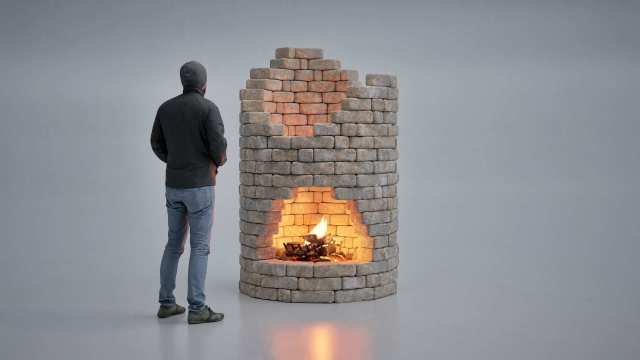
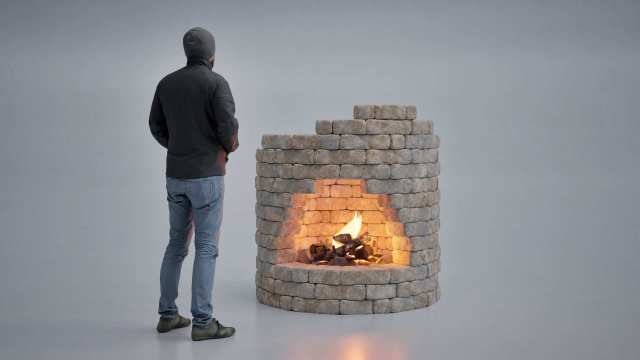
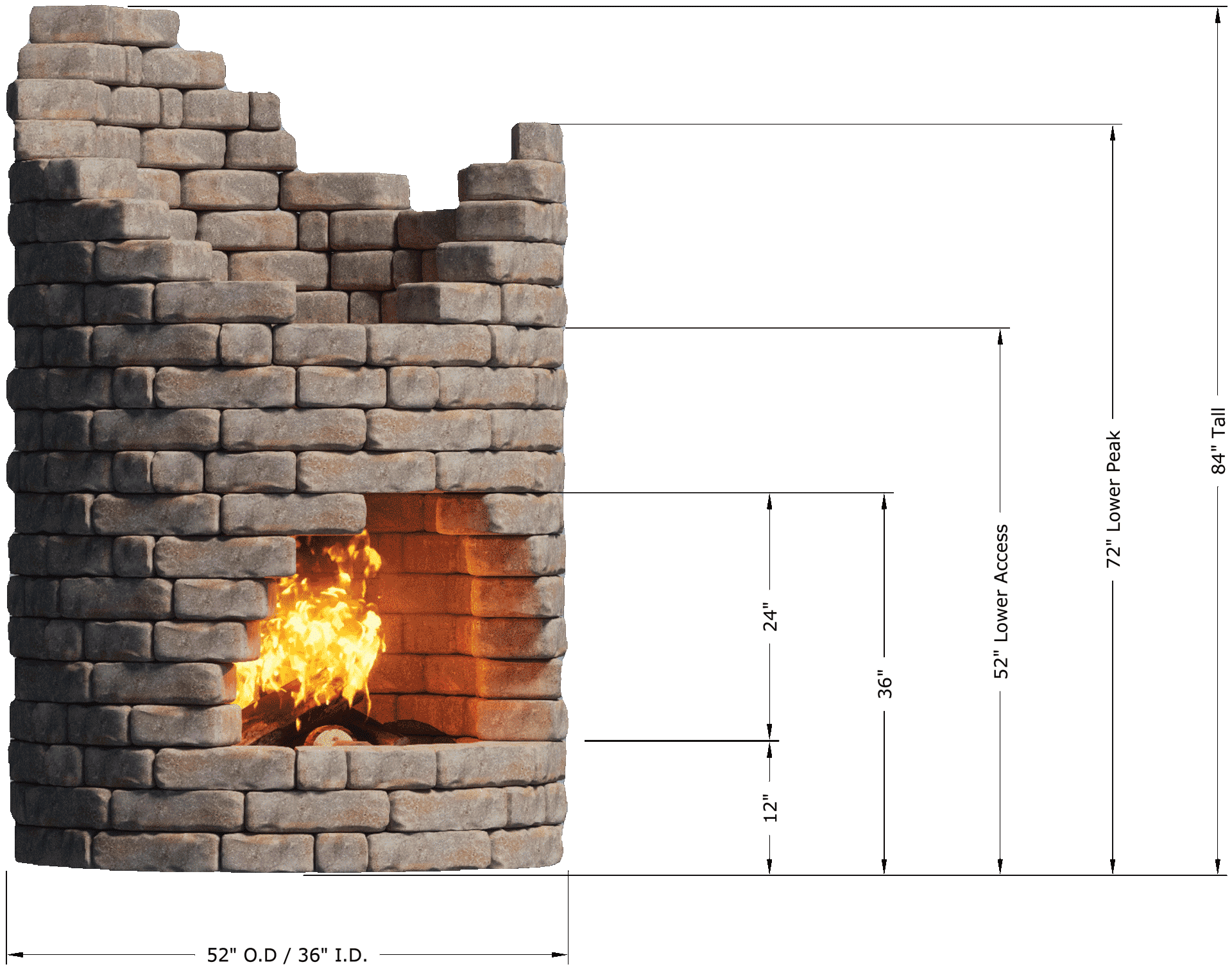
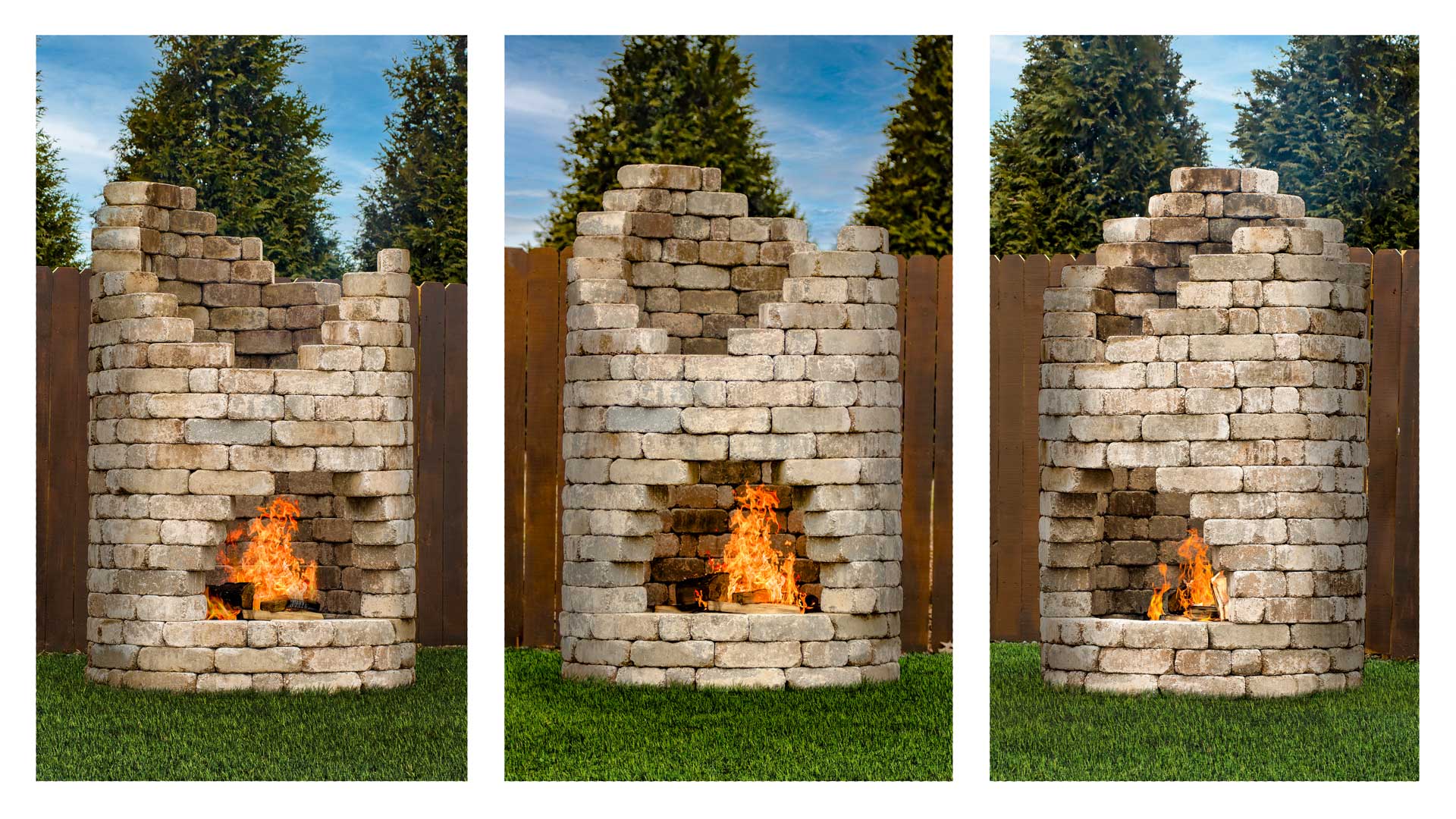
If you’re looking for something between a fireplace and a fire pit, the Fire Spire sits in that middle ground. It has the scale and presence of a fireplace, but the simplicity and accessibility of a fire pit, creating a feature that anchors a space without feeling overly formal.
Structural Like a Fireplace
The Fire Spire is about the same size as a traditional outdoor fireplace, so it’s planned and placed the same way. It has a front-facing opening and a vertical form that directs heat and smoke upward, giving it a more controlled feel than a typical fire pit. While it doesn’t draft like a full firebrick-lined fireplace, it still creates a strong focal point and a defined gathering area.
Operates Like a Fire Pit
At the same time, the Fire Spire keeps the simplicity of a fire pit. There’s no firebrick-lined firebox, hearth, or mantel, and the fire is accessed more directly. The open-top design allows you to interact with the fire from above, whether you’re warming your hands or tending it more casually. That simplicity keeps maintenance lower and makes it easier to use day to day.